
58 Interactive EMS Case Labs for PCP Students
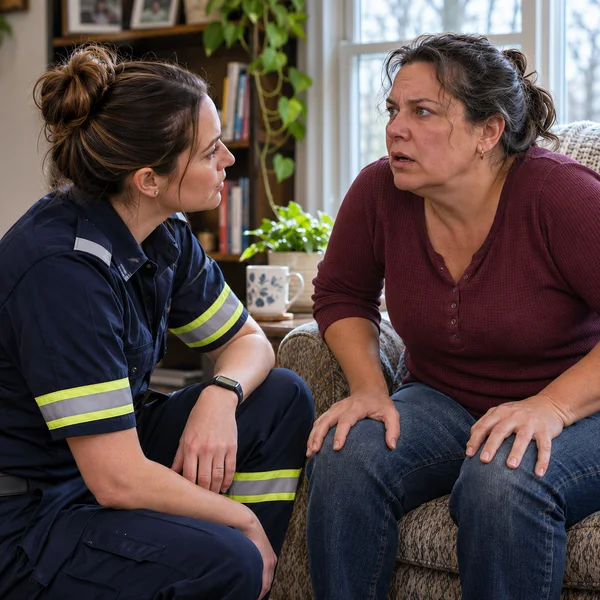
You arrive to find an adult who is short of breath. The patient is breathing fast, and the history gives you several possible explanations. Which finding matters most? What do you think is happening? What would you do first?
That’s the kind of decision you’ll practise in EMS Education’s Micro Sims, a collection of six browser-based EMS Case Labs for Primary Care Paramedic (PCP) students. Across 58 fictional adult patient scenarios, you’ll use patient history, vital signs and assessment findings to identify the likely problem and choose a prehospital care priority. Then you’ll see the reasoning behind the answers.
How the EMS Case Labs work
- Review the case. Read the patient presentation, history, vital signs and assessment findings.
- Make two decisions. Choose the most likely diagnosis or clinical impression, then select the priority prehospital treatment or next action.
- Check your reasoning. Submit both answers to see the correct choices and a brief explanation for each.
- Review and repeat. Use your session score to see whether you’re missing recognition or treatment decisions. Start a new session to work through the cases in a shuffled order.
Before looking at the choices, say your clinical impression and first action aloud. After submitting, ask yourself which finding most influenced your answer. If you missed the case, write down the clue you overlooked and revisit it in a later study session.

Explore all six paramedic Micro Sim Case Labs
Why short EMS scenarios can help you remember
Retrieval practice means recalling something from memory. A Case Lab prompts you to retrieve the relevant assessment findings and care priorities before the rationale appears. Trying to explain your answer before looking at the options makes that recall more active.
Immediate feedback lets you see where your reasoning went off course. Maybe you recognized the emergency but picked an action that could wait. The rationale helps you pinpoint which part of the decision to practise next.
Spaced practice means returning to the material across separate sessions. Try a lab today, revisit a missed case in a few days and attempt a related case the following week. On the later attempt, explain which findings support your answer before checking it. A systematic review in health professions education found that 43 of 63 experiments reported significant benefits from retrieval practice, spaced practice or both. Trumble et al., Advances in Health Sciences Education
Research on microlearning in health professions education also reports benefits for learning, with limited evidence on changes in clinical practice. The research supports the study methods built into these activities. Retention gains for the EMS Education Case Labs themselves have yet to be measured. De Gagne et al., JMIR Medical Education
Use the Case Labs between classes, shifts or practice exams
If you’re studying for the COPR exam, use a Case Lab after reviewing a topic to practise applying it to a patient presentation. If you’re teaching, pause before the answer reveal and ask learners to name the finding that drove their choice. Comparing two learners’ reasoning can give you more to discuss than the score alone.
The cases are designed for education. Use your local protocols, scope of practice and medical direction for patient care.
Start with the call type you find hardest. Work through a case, explain your first priority and check your reasoning. Then come back a few days later and see what you can recall. Explore EMS Education If you’re studying for the COPR exam, use a Case Lab after reviewing a topic to practise applying it to a patient presentation. If you’re teaching, pause before the answer reveal and ask learners to name the finding that drove their choice. Comparing two learners’ reasoning can give you more to discuss than the score alone.
The cases are designed for education. Use your local protocols, scope of practice and medical direction for patient care.
Start with the call type you find hardest. Work through a case, explain your first priority and check your reasoning. Then come back a few days later and see what you can recall. Explore EMS Education
Immediate feedback lets you see where your reasoning went off course. Maybe you recognized the emergency but picked an action that could wait. The rationale helps you pinpoint which part of the decision to practise next.
Spaced practice means returning to the material across separate sessions. Try a lab today, revisit a missed case in a few days and attempt a related case the following week. On the later attempt, explain which findings support your answer before checking it. A systematic review in health professions education found that 43 of 63 experiments reported significant benefits from retrieval practice, spaced practice or both. Trumble et al., Advances in Health Sciences Education
Research on microlearning in health professions education also reports benefits for learning, with limited evidence on changes in clinical practice. The research supports the study methods built into these activities. Retention gains for the EMS Education Case Labs themselves have yet to be measured. De Gagne et al., JMIR Medical Education